

Breast Cancer Awareness

Introduction
October is Breast Cancer Awareness Month, a time dedicated to raising awareness about breast cancer and supporting those affected by this disease. With one in eight women diagnosed in their lifetime, it’s crucial to understand the risks, promote early detection, and offer support to those in need, as well as learn how physical and occupational therapy can help following treatment. Let’s dive in.
Understanding Breast Cancer
Breast cancer occurs when cells in the breast begin to grow uncontrollably. While it primarily affects female bodies, those with male bodies can also be diagnosed. Factors such as genetics, age, lifestyle, and environmental influences can contribute to the risk of developing breast cancer.
Risk Factors
- Genetics: Family history of breast cancer can increase risk.
- Age: Risk increases as women age.
- Lifestyle: Factors such as alcohol consumption, obesity, and lack of physical activity can contribute.
- Hormonal Factors: Certain reproductive history elements, like early menstruation or late menopause, can influence risk.
The Importance of Early Detection
Early detection can significantly improve treatment outcomes and survival rates. Here are some vital steps in the early detection process:
1. Regular Screening
Mammograms: Annual mammograms are recommended for women starting at age 40, or earlier based on family history.
Clinical Breast Exams: These should be performed by a healthcare professional during your yearly check-up.
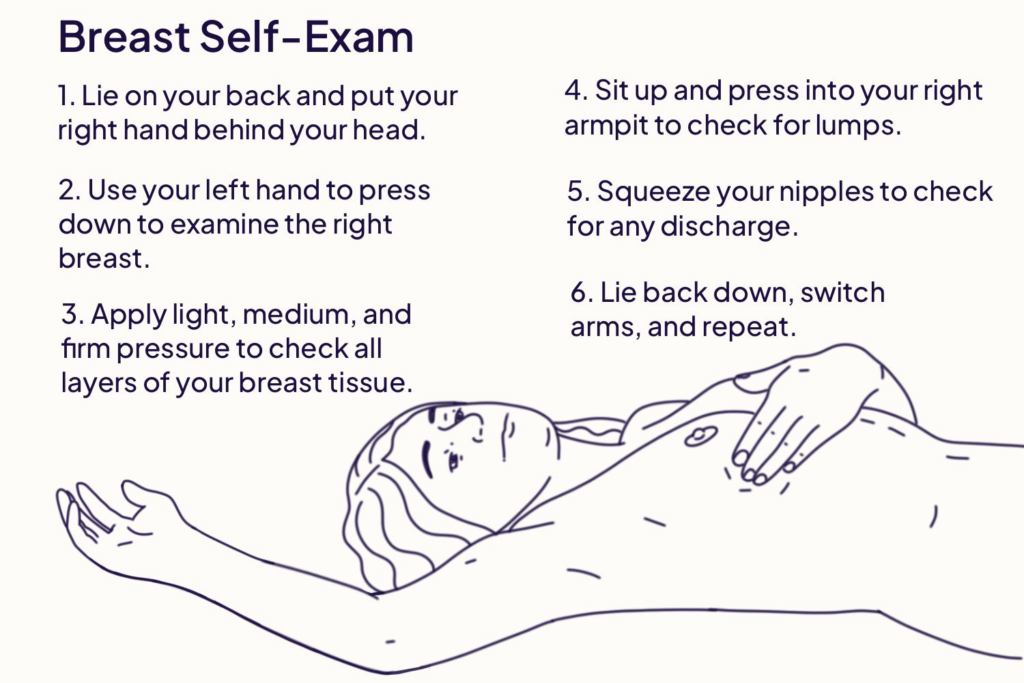
2. Self-Exams
Regular self-exams can help individuals become familiar with their bodies and identify any unusual changes. It’s important to do this regularly, however, it doesn’t replace the necessity of an annual check-up from your medical provider. Individuals who still have regular menstrual periods should do a self-exam after their period ends. This is because normal hormonal changes in the body during menstruation can affect the feel of the breast. For those who have reached menopause or have irregular periods, choose a regular, easy-to-remember date to perform the exam, such as the first day of the month. Using whichever tracking method you prefer, it’s important to keep a record of any changes that you may have noticed in your breasts.
3. Signs and Symptoms of Breast Cancer
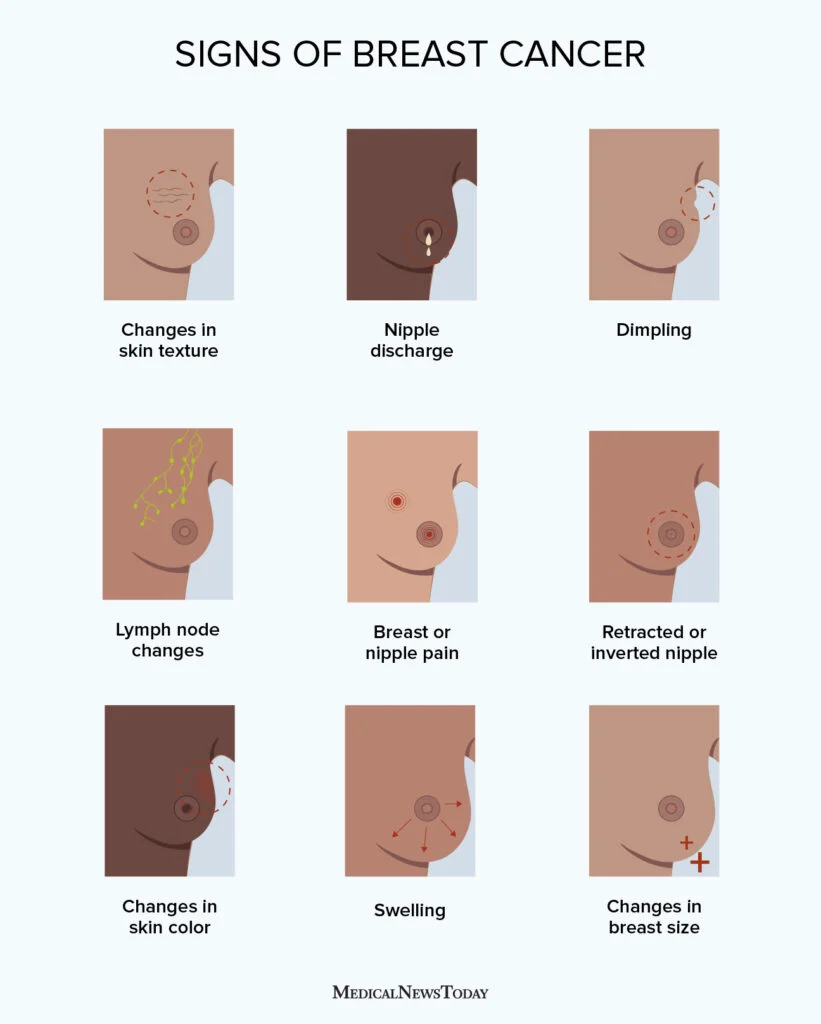
Understanding what is normal for you makes it easier to spot changes. If you notice anything unusual, consult your healthcare provider promptly. Here are the most common signs and symptoms of breast cancer:
- Changes in skin texture
- Examples of these texture changes include scaly skin around the nipple and areola, as though the skin is sunburned or extremely dry, and skin thickening in any part of the breast.These changes may also cause itching, although it is not common.
- Nipple discharge
- Discharge from the nipple can be thin or thick and the color can be clear, milky, yellow, green, or bloody. The discharge typically comes from one nipple, however, it can come from both nipples if cancer is present in both breasts.
- Note that if you are breastfeeding, it’s normal to have milky discharge and this does not mean it’s caused by cancer.
- Dimpling
- This mimics the appearance of the surface of an orange. Cancer cells can cause a buildup of lymph fluid in the breast that leads to swelling, causing this appearance.
- Lymph node changes
- Lymph nodes are small, rounded collections of immune system tissue that filter fluid and capture potentially harmful cells, such as bacteria, virus, and cancer cells. If cancer cells leave the breast, it typically travels to the lymph nodes of the underarm and around the collarbone, leading to swelling. Swollen lymph nodes usually feel like small, firm lumps that may be tender to the touch. It should be noted, however, that lymph nodes can change due to breast infections or an unrelated illness.
- Breast or nipple pain
- Although breast cancer is often painless, it can occasionally cause changes in skin cells that lead to feelings of pain, tenderness, and discomfort.
- Retracted or inverted nipple
- Breast cancer can cause cell changes behind the nipple, resulting in the nipple inverting and moving inward into the breast, or change the size itself. The appearance of the nipples can change depending on where you’re at in your cycle, however, you should always report to your doctor about any new changes.
- Changes in skin color
- Inflammatory breast cancer can cause changes in skin color, most often red or purple, and can occur from ⅓ of the breast to the entire breast.
- Swelling
- Cancer can cause the entire breast or area of the breast to swell, also causing the skin to feel tight. It is normal to have different size breasts, however, the swelling would cause a change from your usual breast size.
- Changes in breast size
- As noted before, swelling can change your normal breast size. Any new changes should be reported to your doctor.
Treatments for Breast Cancer
1. Surgery
- Types: Lumpectomy (removal of the tumor and some surrounding tissue), mastectomy (removal of one or both breasts).
- Side Effects: Pain, swelling, scarring, changes in breast shape, and potential lymphedema (swelling due to fluid buildup).
2. Radiation Therapy
- Description: High-energy rays target cancer cells.
- Side Effects: Skin irritation (redness, peeling), fatigue, and changes in the texture of breast tissue.
3. Chemotherapy
- Description: Use of drugs to kill cancer cells, often given before or after surgery.
- Side Effects: Nausea, vomiting, hair loss, fatigue, increased risk of infection, and changes in taste.
4. Hormonal (Endocrine) Therapy
- Description: Blocks hormones like estrogen that fuel certain cancers.
- Side Effects: Hot flashes, mood swings, weight gain, and increased risk of blood clots.
5. Targeted Therapy
- Description: Focuses on specific characteristics of cancer cells (e.g., HER2-positive cancers).
- Side Effects: Heart problems, diarrhea, and skin rashes.
6. Immunotherapy
- Description: Helps the immune system recognize and attack cancer cells.
- Side Effects: Flu-like symptoms, fatigue, and autoimmune reactions.
How Physical and Occupational Therapy Can Help
Breast cancer treatment can be physically and emotionally taxing, and physical and occupational therapy plays a crucial role in the recovery process. Here’s how it can help:
- Post-Surgical Rehabilitation. After surgery, therapy can aid in recovery by restoring range of motion and reducing scar tissue.
- Managing Lymphedema. Lymphedema, a common side effect of breast cancer treatment, can cause swelling in the arms. Therapists can help by teaching compression techniques and completing manual lymph drainage.
- Improving Strength and Endurance. Cancer treatments often lead to fatigue and muscle weakness. Therapy can help by creating strengthening exercises and a tailored aerobic activity plan.
- Addressing Sexual Health Concerns. Many women experience changes in sexual function due to hormonal treatments or surgical interventions. Pelvic health therapy can help by completing manual techniques, teaching stretches, and educating use of tools to help with relaxation and improving pain.
- Managing Urinary Issues. Some women may experience urinary incontinence or urgency following breast cancer treatment. Therapy can assist with both teaching patients to recognize and control pelvic floor function, and as well as incorporate strengthening exercises to improve bladder control.
- Relieving Pelvic Pain. Post-treatment pelvic pain can arise from surgery, radiation, or hormonal changes. Pelvic health therapy can help by identifying pain sources and implementing techniques to improve muscle function.
How to Get Involved
Sharing information about breast cancer through social media, blogs, or community events can help educate others and lead to increased awareness and early detection. Joining local walks, runs, or fundraising events helps with funding research and honoring those who are or who have battled breast cancer. Foundations such as Susan G. Komen Foundation, Breast Cancer Research Foundation, and the American Cancer Society offer more information, education, and opportunities for fundraising. Lastly, if someone you know is battling breast cancer, offer your support. Whether it’s through meals, companionship, or simply listening, your presence can be a source of comfort.
Conclusion
Pelvic health therapy can significantly enhance the quality of life for women recovering from breast cancer treatment. By addressing issues related to sexual health, urinary function, pelvic pain, and overall core stability, therapy provides essential support during the healing process. If you or someone you know is experiencing concerns after treatment, consider seeking pelvic health therapy to explore available options. Your journey to recovery can be empowered through targeted, compassionate care!
Breast Cancer Awareness Month serves as a reminder of the importance of education, early detection, and support for those affected by breast cancer. By spreading awareness and engaging in community efforts, we can help save lives and provide hope. Let’s work together to empower each other and make a difference this October and beyond. Together, we can create a world where breast cancer is detected early and treated effectively. 💖