

MRI: Do You Really Need One?
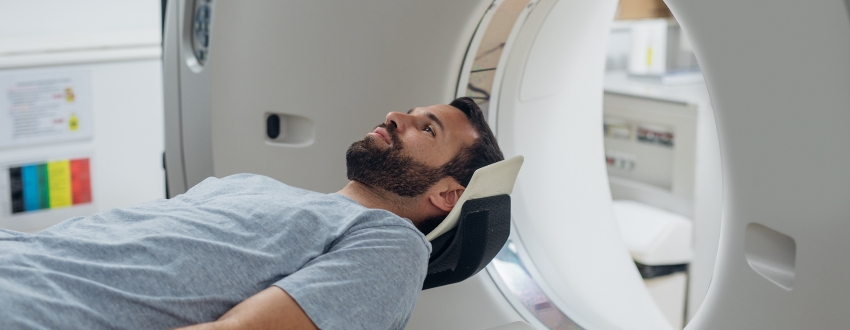
It’s a common question we hear from patients:
- “Don’t I need an MRI to know what’s wrong?”
- “How can you treat me if you haven’t seen a scan?”
- “My doctor said I might need one.”
These are all completely reasonable questions. MRI scans are often seen as the “gold standard” for finding the cause of pain, so it makes sense that many people feel they need one before starting treatment.
However, the reality is a bit more nuanced.
MRIs Don’t Always Tell the Full Story
MRI (magnetic resonance imaging) scans are powerful diagnostic tools, and in certain situations, they are extremely important. But when it comes to common conditions like back pain, neck pain, or joint pain, MRIs don’t always provide clear or complete answers.
In fact, research has shown that many people with no pain at all still have what appear to be “abnormal” findings on MRI.
- About 1 in 2 people with NO back pain have a disc bulge
- Around 1 in 3 have a disc protrusion
- These findings become more common as we age
A large review published in the American Journal of Neuroradiology (Brinjikji et al. (2015) Systematic Literature Review) found that these types of changes are often a normal part of aging, much like wrinkles or gray hair.
Similarly, a study in the New England Journal of Medicine (Jensen et al. (1994) Lumbar MRI in Asymptomatic Individuals) found that even people with no history of back pain frequently showed disc bulges and other changes on MRI.
If you’d like to explore the research:
- AJNR review: https://www.ajnr.org/content/36/4/811
- NEJM study: https://www.nejm.org/doi/full/10.1056/NEJM199407143310201
What This Means for You
The most important takeaway is this: Just because something shows up on an MRI does not necessarily mean it is the source of your pain.
This can be surprising, but it’s critical for making good decisions about your care.
When imaging findings are assumed to be the cause without considering the full picture, it can sometimes lead to:
- Confusion about what is actually driving symptoms
- Increased worry or concern about the body
- Treatments that may not address the real issue
This is one reason many healthcare providers recommend starting with a thorough clinical evaluation before jumping to imaging.
Why Imaging Results Can Sometimes Make Pain Feel Worse
MRI reports often include terms like “degeneration,” “disc bulge,” or “tear.” While these sound concerning, they are often normal, age-related changes and not inherently dangerous.
However, seeing these words can understandably create fear or uncertainty. When people begin to think of their body as damaged or fragile, they may start to:
- Move less or avoid activity
- Guard or tense certain areas of the body
- Limit normal daily movements
Over time, this can contribute to stiffness, weakness, and even increased pain. In other words, how we interpret imaging results can sometimes influence how we feel and move.

When Is an MRI the Right Choice?
There are absolutely situations where an MRI is necessary and helpful.
Your provider may recommend imaging if there are signs of:
- A serious injury or trauma
- Significant or worsening nerve symptoms (such as progressive weakness or numbness)
- A condition that requires further medical evaluation or surgical consideration/
In these cases, imaging plays an important role in guiding appropriate care.
How We Evaluate Pain Without an MRI
Physical Therapists take a comprehensive approach to understanding your condition. Rather than relying on a single image, we look at how your body is actually functioning.
This includes:
- A detailed discussion of your symptoms and history
- Assessment of your movement, strength, and mobility
- Observing how your body responds to certain activities
- Identifying patterns that may be contributing to your pain
This approach allows us to develop a treatment plan that is tailored specifically to you, not just based on what shows up on a scan.
The Bottom Line
MRI scans can be helpful in the right situations, but they are not always necessary to begin treatment and start feeling better.
In fact, many people experience significant improvement with the right guidance, movement, and treatment plan without ever needing imaging.
If you are dealing with pain, the most important first step is getting a thorough evaluation and understanding your options.
Have Questions? We’re Here to Help
If you’re unsure whether you need an MRI, or you would like help understanding your symptoms, our team is here to support you.
You can schedule a free screening or speak with one of our therapists to determine the next best step for your care.