
Top Baseball Injuries and Prevention Tips
While studies show that most baseball injuries are related to overuse, traumatic injuries are also a risk in both youth and more advanced levels of baseball. No matter the cause of injury, most are preventable with proper preparation.
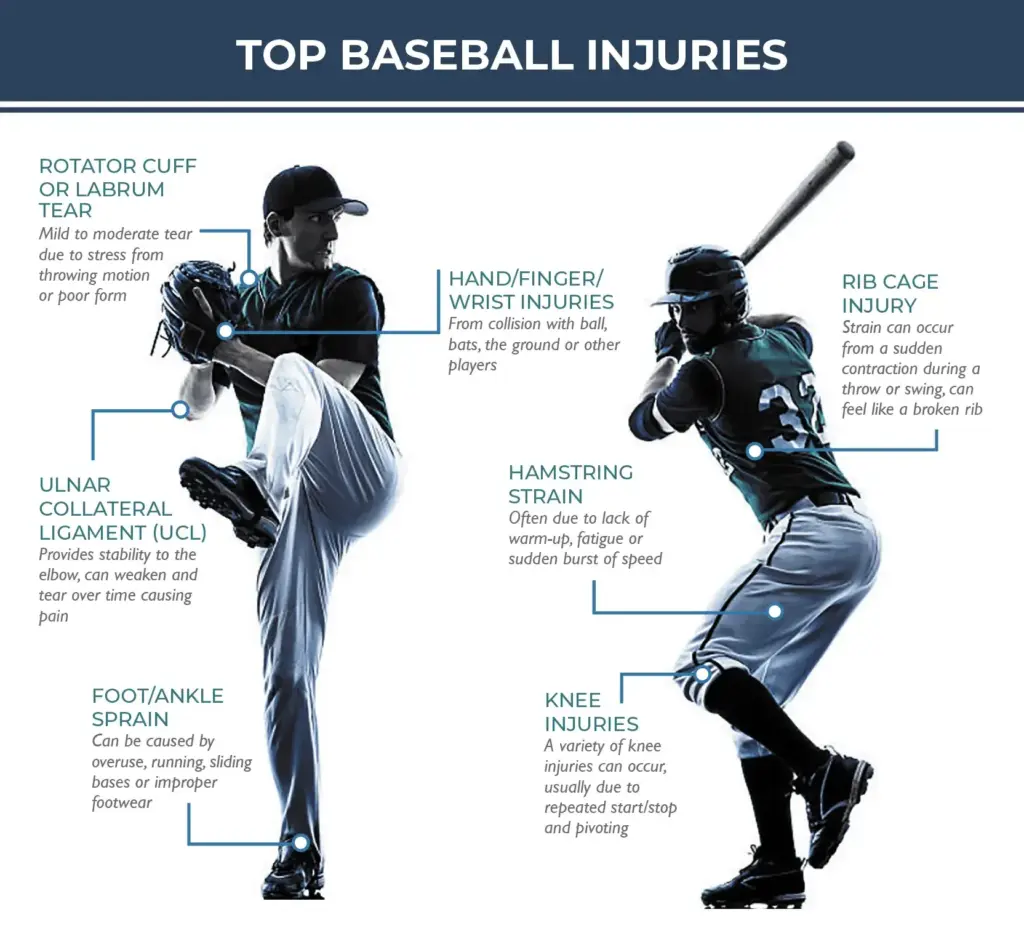
Some of the most common baseball injuries include:
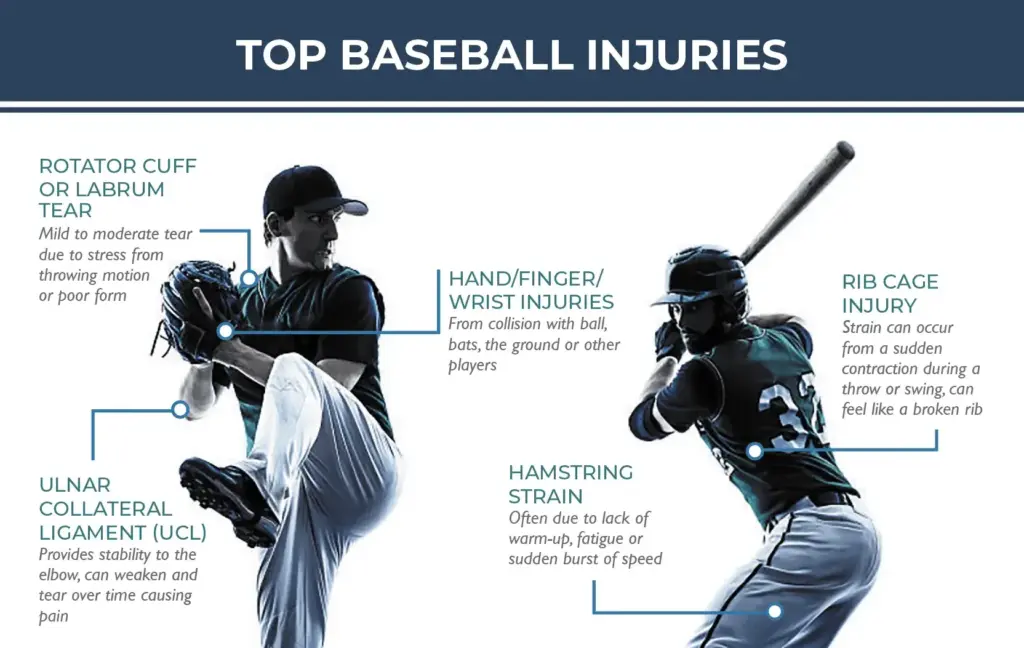
- ROTATOR CUFF OR LABRUM TEAR: Mild to moderate tear due to stress from throwing motion or poor form
- ULNAR COLLATERAL LIGAMENT (UCL): Provides stability to the elbow, can weaken and tear over time causing pain
- HAND/FINGER/WRIST INJURIES: From collision with ball, bats, the ground or other players
- FOOT/ANKLE SPRAIN: Can be caused by overuse, running, sliding bases or improper footwear
- RIB CAGE INJURY: Strain can occur from a sudden contraction during a throw or swing, can feel like a broken rib
- HAMSTRING STRAIN: Often due to lack of warm-up, fatigue or sudden burst of speed
- KNEE INJURIES: A variety of knee injuries can occur, usually due to repeated start/stop and pivoting
TIPS TO PREVENT INJURY
Some of the most important prevention tips are more simple than you’d think. Being consistent with the following tips will go a long way to a healthy season.
- NEVER SKIP OR SKIMP A WARM-UP. It’s just not worth it – playing with cold muscles puts you at greater risk for injury. Focus on the back, hamstrings, and shoulders when you stretch, as tight muscles in these areas are more likely to be injured. Every practice, every game, every time.
- WEAR THE RIGHT EQUIPMENT. Check your equipment regularly for damage or wear, including cleats, helmets, mitts and other equipment. If your equipment doesn’t feel right, speak up and ask a coach or parent to help you inspect it.
- HYDRATE. Proper hydration makes your muscles work better and makes you feel less tired. It can also help reduce your risk of cramps. Be sure to start drinking water well before practice begins, not just when you feel thirsty.
- COOL DOWN SLOWLY. When the game is over, you may be tired or want to celebrate a big win. But cool down stretches are crucial to preventing soreness and injury to help you be ready for the next practice. Take your time and stretch slowly, holding each stretch for 30 seconds.
- DON’T THROW TOO MUCH. Daily, weekly and annual overuse is the greatest risk to a pitcher’s arm health. Numerous studies have shown that pitchers who throw more pitches per game and those who do not adequately rest between appearances are at an elevated risk of injury. The most important thing is to set limits for a pitcher and stick with them throughout the season. Click here for more tips and guidelines to help pitchers avoid injury.
Don’t let an injury keep you on the bench. Contact a Renue Physical Therapy clinic near you for a custom injury prevention and strengthening plan today.